The Android PC: Google’s Second Shot at the Unified Computing Dream
The holy grail of personal computing has always been a single, seamless experience that follows you from your pocket to your desk. For decades, that dream has remained elusive, littered with ambitious failures.
Now, in fall 2025, the buzz is growing: Google, in partnership with Qualcomm, is making a serious push to bring Android-based PCs to the mainstream. This effort isn’t just another Chromebook; it’s a full-scale attempt to extend the world’s dominant mobile OS into the laptop form factor.
Google’s Android PC initiative represents a direct challenge to the Windows PC market and a strategic probe into Apple’s carefully segregated ecosystem. But to succeed where others have faltered, Google must learn from the most notable ghost of its past: Microsoft’s Windows 8. While Google is scaling up from mobile rather than down from the desktop, the potential pitfalls—especially in marketing—look eerily familiar.
The Ghost of Windows 8: Why the PC-First Model Failed
To understand why Google has a fighting chance, it’s worth revisiting the fatal flaws of Microsoft’s unified OS experiment with Windows 8 and Windows Phone.
Microsoft’s strategy tried to shrink the dominant desktop OS into a mobile phone while imposing its touch-centric “Metro” interface on traditional mouse-and-keyboard users. Two critical problems doomed the effort:
- The app gap – An operating system is only as good as its software ecosystem. Mobile developers were overwhelmingly focused on iOS and Android, leaving Windows Phone users with a barren app store. No Snapchat, no native Gmail, and a steady stream of major apps withdrawing support made the hardware irrelevant.
- The jarring user experience – Metro’s live tiles were innovative on a phone, but on a 27-inch desktop monitor with a mouse, the interface was inefficient and confusing, alienating core Windows users.
Microsoft tried to master both worlds but ended up a jack of all trades and a master of none. The failure of Windows Phone highlighted a crucial lesson: you cannot force a desktop-first paradigm into a mobile-first world.
Smartphone-Up Strategy: A More Natural Evolution
Google’s approach is the inverse—and that’s its greatest strength. Instead of shrinking a desktop OS, it is scaling a mature, app-rich mobile OS upward. By leveraging Android’s vast ecosystem and developer base, Google is attempting a more natural evolution toward a unified computing experience.
Discover More:
- Mobile Apps
- Android PC Mouse Purchase
- Personal Computer Reviews
- Computers
- New Computers
- Unified Computing Solutions
- Best Smartphones
- Android PC Keyboard Purchase
- Android PC Price Comparison
- Android PC Accessories Online
Android PCs: Google’s Smartphone-First Advantage
Google’s smartphone-first strategy provides a fundamental edge: it has already won the app war. The Google Play Store offers virtually every application and service a consumer could need. Unlike Microsoft, which struggled to attract developers for Windows Phone, Google only needs to encourage developers to optimize existing Android apps for larger, landscape-oriented screens with keyboard and mouse input—a far simpler task.
Moreover, billions of users are already familiar with Android’s interface, from navigation to notifications and settings. There is no steep learning curve. An Android PC would feel like a natural extension of the smartphone, creating a low-friction adoption pathway that Microsoft never had.
The Marketing Challenge
Despite its engineering prowess, Google has a long history of brilliant products failing due to poor marketing, from Google+ and Stadia to Allo and early Pixel branding. The company often struggles to communicate a simple, compelling reason for consumers to choose its products.
This is where the parallel to Microsoft’s Windows Phone failure is striking. Microsoft failed to explain why users should abandon iPhones or Android devices. Similarly, Google must answer: why spend $700 on an Android PC when a Windows laptop or a Chromebook might suffice?
Without a clear, sustained marketing campaign emphasizing a unique value proposition—like seamless app continuity across devices—Android PCs risk getting lost in the crowded market, repeating the missteps of the past.
A New Form Factor: The Smartphone as Primary Computer
If Google navigates the marketing challenge, Android PCs could accelerate the blurring of lines between smartphones and personal computers. The ultimate vision might not be an “Android PC” at all, but the end of the PC as a separate device.
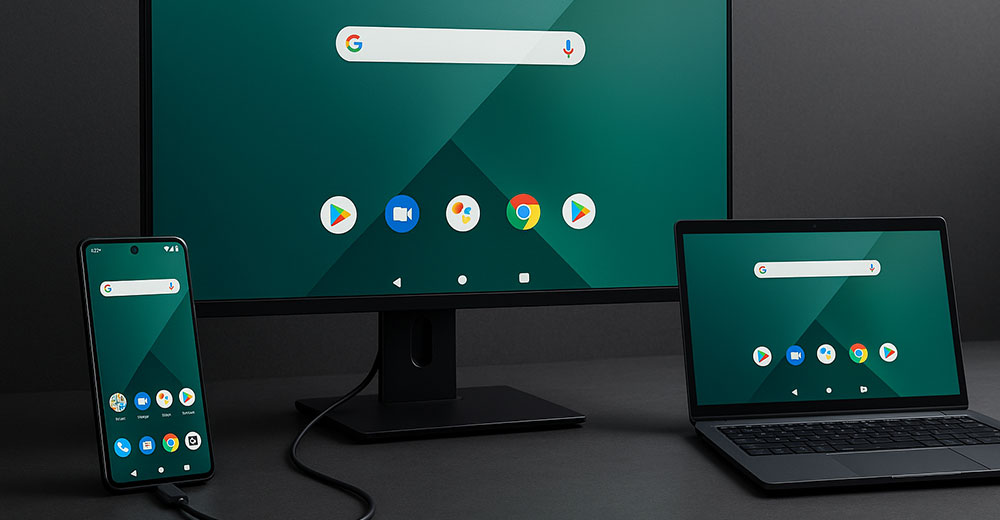
Imagine a smartphone as the central computing brain, docking into various shells to match context:
- At your desk: Dock your phone to a monitor and keyboard for a full desktop experience.
- On the go: Connect to a lightweight laptop shell for portable productivity.
Samsung’s DeX has experimented with this concept, but Google’s full OS-level integration could make it mainstream, transforming the PC from a standalone device into a peripheral for your phone.
Strategic Implications: Apple and Microsoft
Android PCs highlight a vulnerability for Apple, which maintains three separate OSes—iOS, iPadOS, and macOS—on increasingly unified silicon. While this model drives device sales, it creates redundancy and a less seamless experience.
Google, with its ad-driven ecosystem, has no such constraints. Its revenue depends on engagement, not hardware sales, giving it the freedom to unify platforms without cannibalizing its core business. In doing so, Google could reshape personal computing around the smartphone, challenging both Apple’s hardware-centric strategy and Microsoft’s legacy PC dominance.
The Windows Threat
For Microsoft, the challenge is immediate and tangible. A wave of affordable, capable Android PCs powered by efficient Qualcomm chips directly targets the heart of the Windows laptop market. To respond, Microsoft will need to refine its Windows on Arm experience, ensuring smooth performance and full compatibility with legacy applications.
More critically, Microsoft must double down on its strengths: deep enterprise integration and a vast library of professional software that Android cannot yet match. Windows may need to cede the casual consumer segment while maintaining its status as the undisputed OS for serious work.
Wrapping Up
Google’s Android PC initiative with Qualcomm represents the most credible attempt to date at realizing a unified computing platform. The smartphone-up strategy is inherently strong, leveraging an unbeatable app ecosystem and a user base of billions.
Yet the success of this project depends on Google addressing its historical weakness: marketing with clarity, passion, and persistence. If it succeeds, Android PCs won’t just create a new category of laptops—they could redefine the concept of the personal computer, forcing both Apple and Microsoft to adapt or risk being overtaken by the tiny computer that fits in everyone’s pocket.
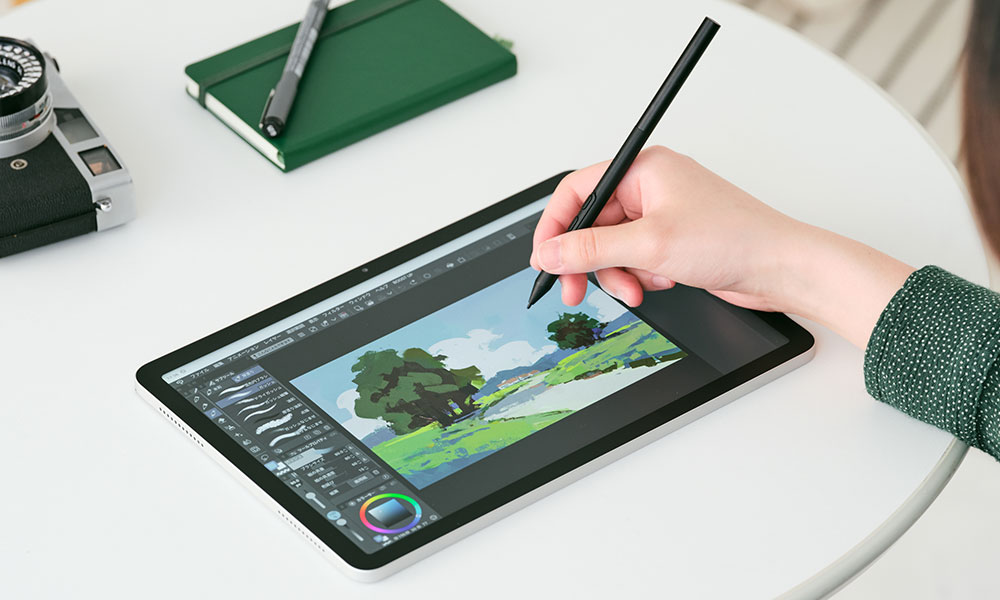
The Wacom MovinkPad 11
For years, digital artists have faced a frustrating compromise: choose the sleek, consumer-friendly Apple iPad with its vibrant display but slick, less precise drawing surface, or opt for a dedicated Wacom tablet, sacrificing portability for professional-grade pen technology.
With the launch of the Wacom MovinkPad 11, that compromise is officially over. This device isn’t just another tablet—it’s a purpose-built, expertly engineered tool that sets a new standard for portable digital creation, combining precision, portability, and professional-grade performance in a single package.
Wacom MovinkPad 11: The Ultimate Portable Canvas
Wacom’s legendary industrial design shines through in the MovinkPad 11. The tablet feels less like a fragile consumer device and more like durable studio equipment. The back features a comfortable, grippy texture, while the display has a subtly etched surface. Unlike the slick glass of an iPad, it offers paper-like resistance, giving artists the tactile feedback needed for precise linework.
Paired with Wacom’s Pro Pen 3, which employs battery-free EMR technology and near-zero latency, the drawing experience is exceptional, rivaling even larger, stationary professional tablets.
At a retail price of $449.95, the MovinkPad 11 competes with mid-tier devices like the iPad Air—but the comparison is misleading. While the iPad is a general-purpose computer that can be used for art, the MovinkPad is a dedicated professional art tool from the ground up. For that price, it delivers superior display technology and pen precision, offering a creative experience Apple cannot match.
The ideal user is the serious creative professional or dedicated hobbyist who values the drawing experience above all else:
- Digital illustrators needing accurate color on the go
- Comic artists storyboarding in cafés
- Animators sketching keyframes on the train
While the iPad aims to be everything for everyone, the MovinkPad 11 is unapologetically for artists. It is, without question, the ultimate portable canvas. Personally, while I’m not an artist, my mother was—and I’m confident she would have loved this tablet. That’s why it earns my Product of the Week.
Wacom MovinkPad 11 review, Best tablet for digital artists ,Portable drawing tablet Wacom ,Pro Pen 3 Professional art tablet, iPad alternative for artists ,Digital illustration tablet, OLED drawing tablet ,Tablet for comic artists ,Tablet for animators
Android PC,Google Android laptop,Unified computing platform,Smartphone-first PC,Android PC vs Windows,Dockable smartphone laptop,Qualcomm Android PC,Best Android PC,Android PC accessories
About the Author