
Trade tensions between the US and China resurfaced after President Donald Trump warned of imposing a 100 percent tariff on all Chinese goods starting November 1.
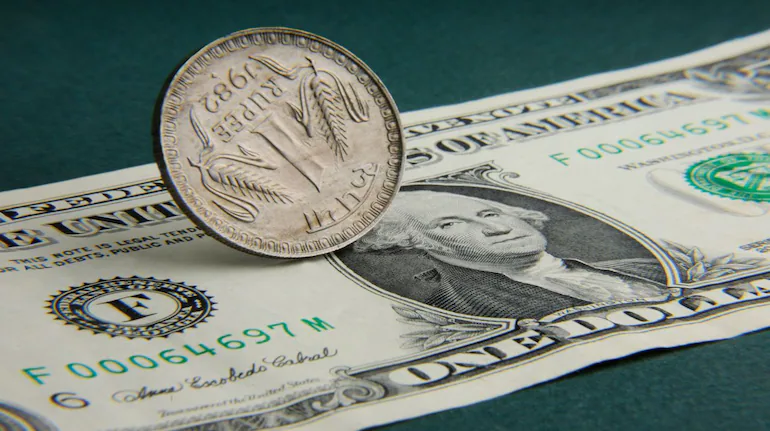
The rupee opened 7 paise lower on October 13, tracking weakness in select Asian currencies amid renewed trade tensions between the United States and China.
The local currency opened at 88.76 against the US dollar, after ending the previous session at 88.69.
Among Asian peers, the Japanese yen weakened 0.52 percent, the South Korean won slipped 0.42 percent, the Taiwanese dollar fell 0.34 percent, and the Indonesian rupiah declined 0.16 percent, according to Bloomberg data.
Trade tensions between the US and China intensified after President Donald Trump announced on Friday (local time) that Washington will impose a 100 percent tariff on all Chinese goods starting November 1.
The new tariffs would be levied “over and above any tariff that they are currently paying,” Trump stated.
The threat followed Beijing’s announcement that it would impose broad export restrictions on rare earth minerals—materials vital to global technology and manufacturing—starting the same day.
Trump also stated that the US would implement export controls on “any and all critical software.”
In a lengthy post on Truth Social, Trump criticized China’s move, describing it as a “moral disgrace in dealing with other nations.” He wrote, “It has just been learned that China has taken an extraordinarily aggressive position on trade by sending an extremely hostile letter to the world, stating that they will, effective November 1, 2025, impose large-scale export controls on virtually every product they make—and even some they do not.”
“Technically, resistance is seen at 88.80–88.85, and a breakout above this range could pave the way toward 89.00–89.20,” said Amit Pabari, Managing Director at CR Forex Advisors. “On the downside, support lies at 88.20–88.40, and a move below this level could signal the beginning of a gradual appreciation in the rupee.”
About the Author